
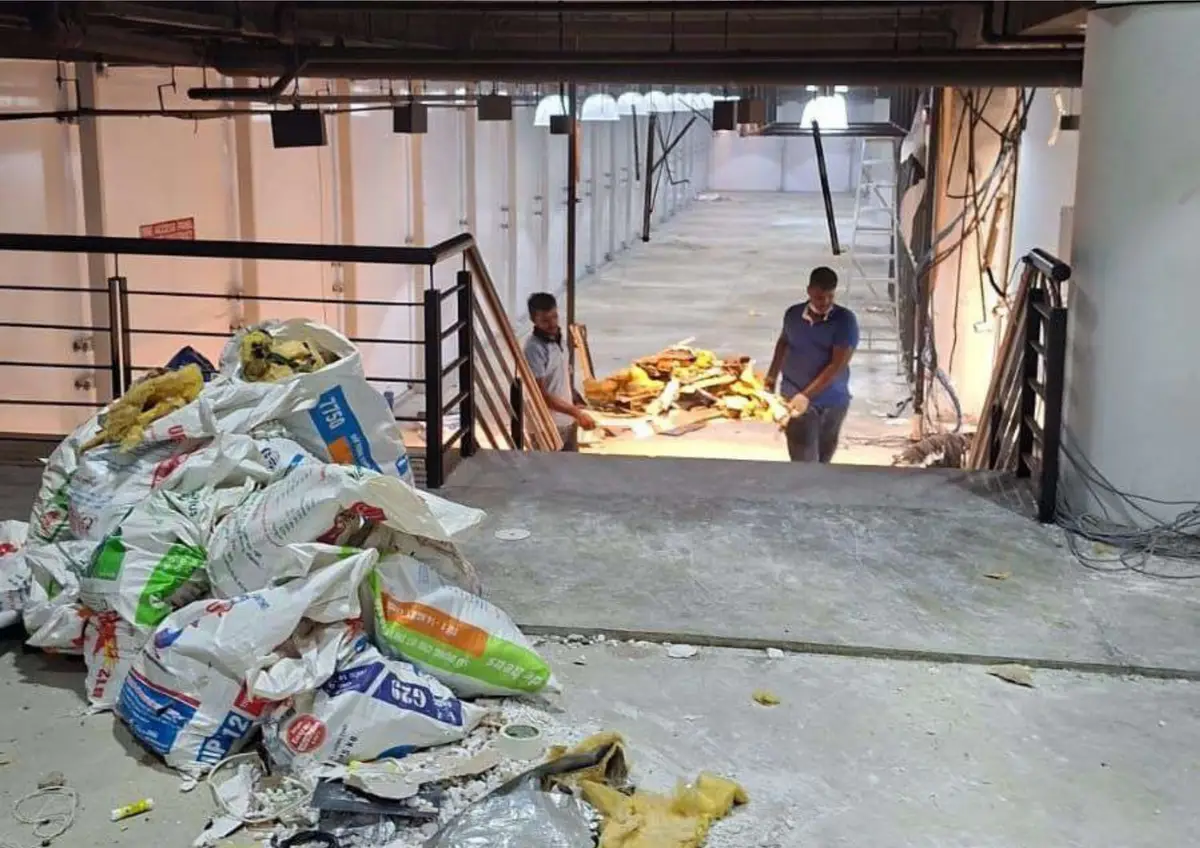
Reinstating a warehouse or industrial unit in Singapore
Warehouse and factory leases often name items that must stay or go, such as mezzanines, racking, partitions and floor coatings. This guide shows what to check with your landlord and what to prepare before asking for a reinstatement quotation.
1. Start with who your landlord is
Industrial units are let by different kinds of landlord, and each publishes different rules. Some units are on JTC land or in JTC buildings. Others are in privately owned or REIT-owned industrial and business park buildings. Your lease names the landlord and sets what you must hand back. Everything else in this guide depends on that, so find the reinstatement clause first. Our guide to the reinstatement clause in your lease explains how to read it.
JTC states that tenants must reinstate the premises before returning them on the lease expiry date. It says it contacts the tenant about six months before expiry to arrange a joint site inspection and to tell the tenant the reinstatement requirements under the lease, and that if works are unfinished or the tenant stays on, double rent may be charged from the expiry date. If your unit is not a JTC unit, ask your landlord or managing agent what their equivalent timetable is.
2. Retained items: confirm each one in writing
Do not assume everything installed must be removed or may be left. Landlords’ published guides show that retained fixtures and restored services depend on written requirements. JTC’s site-return guidance for land must not be treated as the default scope for a unit inside a building. Obtain the applicable document.
Use the table below as a worksheet. For each item, record what the lease says, ask the landlord or managing agent to confirm in writing, and photograph the item. If you did not install it, say so and ask who is responsible.
| Item | What to check | Remove, keep or restore? | Landlord confirmed (name, date) |
|---|---|---|---|
| Mezzanine floor | Who built it, and the consent and approval records for it | ||
| Racking and shelving | Whether it is fixed to the floor, and whether the floor needs making good | ||
| Office and partition walls | Whether built by you or inherited, and the original layout | ||
| Floor coating or hardener | Whether the landlord wants it left or removed | ||
| Electrical, lighting and added circuits | Whether landlord-installed services must be reinstated | ||
| Air-conditioning, ventilation and exhaust | Who installed them, and what happens to ducting and openings | ||
| Fire protection devices | Whether anything was moved or added, and who may alter it | ||
| Sumps, grease traps and drains | Cleaning or other requirements at return | ||
| Meters and utilities | Whether the landlord wants them removed or left | ||
| Signage and external fixtures | Removal and making good of surfaces |
3. Approvals before works on the unit
Removing built items may need consent too, so check before you start. JTC's schedule of statutory controls for land, standard factory and workshop customers says premises are taken as they are, that alteration and addition works need JTC's Land Planning Division consent as landowner plus the relevant authority approvals before works start, that a Qualified Person such as a professional engineer or architect is involved, and that works must not affect the structure. It also says fire-fighting installations must be kept operational, and that modifications need JTC consent and a submission to the fire authority. It notes that consent is not approval, that its list is not exhaustive and that the onus is on the lessee.
If your landlord is not JTC, ask the same questions: does removal need landlord consent, a Qualified Person or an authority submission, and who is responsible? Confirm the allocation in writing. This guide does not establish that Omni provides professional assessment or submission services. See the approvals guide.
4. Access, loading and the building
Industrial buildings differ widely in loading bays, goods lifts, ramps, headroom and floor loading limits. Check these with the landlord before the contractor prices anything, because they decide how racking, debris and heavy items are brought out. Ask for the written rules if there are any.
As one illustration, JTC's fitting-out guidelines for the Chemicals Hub development say that the loading bay is to be notified at least three hours before use, that after-hours use needs the tenant present, and that drilling or hacking the floor structure needs JTC's written consent. Those guidelines are specific to that development. CapitaLand's industrial guide says loading and unloading happen only at times and places the landlord notifies, that nothing may be installed on structural members above floor level, and that floor loading limits and machine fixings are controlled. Again, use these as prompts, not as your unit's rules.
| Item | What to ask | Answer | Confirmed by |
|---|---|---|---|
| Loading bay | Which bay, booking method and notice needed | ||
| Lifts or ramps | Size, load limit, hours, any fees | ||
| Working hours | Hours for noisy and quiet works, and weekends or public holidays | ||
| Height | Clear height inside and at doors, plus any limits for equipment brought in | ||
| Floor | Load limit, and whether hacking or drilling needs consent | ||
| Common areas | Protection required, and where waste may be moved or staged | ||
| Security and passes | Gate rules, contractor registration, escort |
5. Environmental checks and waste
Where JTC requires an Environmental Site Assessment, its guidance calls for a suitably listed consultant and allows months for the process. Confirm early whether an exit assessment applies and who must arrange it. Assessment and contamination work are separate specialist scopes, not services promised by this guide.
For ordinary renovation debris, NEA says that inorganic waste including construction and renovation debris falls under Class A general waste, and that general waste collectors are licensed by class. If your unit held chemicals, oils, solvents or other hazardous materials, say so plainly in your enquiry and ask your landlord and the relevant agency how those must be handled. Do not ask a general contractor to take them away informally.
6. Timeline: work backwards from the return date
Put the lease expiry date at the end and work backwards. For JTC units the joint inspection is arranged about six months before expiry, and an exit assessment, where required, can take months. Add time for any landlord consent, any Qualified Person involvement, the works themselves, rectification after inspection and the final handover. Ask each party for its own lead time rather than relying on a general estimate.
Keep the dates for the work-completion, the landlord's inspection and the key return separate. Finishing works does not mean the landlord has accepted the unit.
- Find the reinstatement clause and the expiry or break date.
- Identify the landlord and ask for the written reinstatement requirements and any site return guidelines.
- Fill in the retained items worksheet and get written confirmation.
- Ask whether any consent, Qualified Person or environmental assessment is needed, and by whom.
- Fill in the access worksheet.
- Send the details to contractors and compare written scopes.
- Arrange the joint inspection, note rectification items and clear them.
7. What to send Omni for a quotation
Omni Contractors carries out reinstatement, demolition, hacking and disposal works in Singapore. Send the unit address, floor area, ceiling height and photographs of every area including the mezzanine and roof-level services. Include the completed retained items and access worksheets, the landlord's written requirements, the original layout if you have it, and your return date. If hazardous materials were stored or used, say so. We will review the details and discuss a site assessment and quotation.
Useful pages: reinstatement works, demolition, hacking and disposal services. To compare quotations like for like, use the quotation checklist. Send the details through the contact page.
Send your unit details to Omni
Sources
All pages below were read on 16 October 2026. They describe JTC and CapitaLand's published positions, not the rules for every industrial landlord. Ask your own landlord for the documents that apply to your lease.
- JTC: Returning your premises upon lease expiry
- JTC: Environmental Site Assessment
- JTC: Schedule of Statutory Controls for Land, Standard Factory and Workshop Customers (October 2024)
- JTC: Fitting-Out / Renovation Works Guidelines (Chemicals Hub)
- CapitaLand: Business Park and Industrial Tenant's Guide (revised 15 January 2024)
- NEA: Waste collection systems and general waste collectors
What should I check before returning a warehouse or industrial unit in Singapore?
Read the lease reinstatement clause, ask the landlord for written reinstatement requirements, and confirm which installed items must be removed, kept or restored. Then check access, any consent or Qualified Person needed for the works, and whether an environmental assessment applies.
Do I have to remove the mezzanine, racking and partitions?
It depends on your lease and the landlord. Published guides from landlords show that some let the tenant remove such items but require items the landlord names to be left. Ask in writing, and check the consent records for anything built after the lease began.
Does JTC require an inspection before I return the unit?
JTC states that it contacts tenants about six months before lease expiry to arrange a joint site inspection and to set out the reinstatement requirements under the lease. Check your lease and ask JTC about your own unit.
Does reinstating an industrial unit need an environmental assessment?
An exit Environmental Site Assessment can apply to JTC premises depending on the activities and requirements. Ask JTC or the landlord early whether one is required and which consultant must be appointed. It is a separate specialist scope.
Can Omni handle hazardous materials left in the unit?
Do not assume so. Declare chemicals, oils, solvents or other potentially hazardous materials and ask the landlord and relevant agency how they must be handled. Specialist hazardous-waste or contamination work must be confirmed separately from general reinstatement and disposal.
Free quotation
Tell us about your unit.
We quote on the actual scope. These help us get it right the first time:
- Floor plan or unit size
- Photos of each room and the ceiling
- Lease reinstatement clause or handover checklist
- Handover or move in date
Send us the details
WhatsApp is fastest. Attach photos, the floor plan or the handover checklist and we will come back with a quote.
WhatsApp 8368 2943 Call +65 9475 1494 Email us