
Hacking, dismantling and demolition: what each word covers in a quotation
Contractors, landlords and building managers do not always use these three words the same way. Before you compare quotations, write down what is being removed, what sits behind it and who confirms it is safe to remove.
Why one job can be called three different things
Contractors sometimes use hacking, dismantling and demolition for overlapping parts of a job. Omni’s pages mention removal of partitions and fixtures under more than one heading. These everyday labels do not determine the legal approval route: actual work and applicable rules do.
So this guide uses the three terms as working descriptions. The point is to help you write a scope that every contractor can price in the same way, and to show which questions sit behind each word. If you are comparing prices, ask each contractor to list the items, areas and finishes under each heading, and read that list against the commercial renovation quotation checklist.
Working descriptions side by side
The table gives a plain meaning for each term and the examples Omni names on its own service pages. The plain meaning is a reading aid, not a definition from any regulation, and a particular job may need more than one of the three.
| Term | Plain meaning | Examples on Omni's pages | Owner page |
|---|---|---|---|
| Hacking | Breaking out hard, fixed materials | Tile hacking for floors and walls, floor hacking, hacking of selected non-load-bearing walls and partitions, platforms and brickwork | Hacking contractor |
| Dismantling | Taking apart assembled items so they can be carried out, with little or no breaking | Built-in cabinets, counters, shelves, partitions and display units, plus wardrobes, office furniture and retail fittings before disposal | Hacking and disposal services |
| Demolition | Wider removal of built-up areas, often several of the above together | Partitions, false ceilings, flooring and built-in fixtures; in industrial units, storage structures, platforms and workstations | Demolition contractor |
Write the scope by item, not by label
Whatever word is used, a quotation can be compared only if it names what comes out and what stays. For each room, list the element, its material if you know it, the approximate area, and whether it must go, may go or must stay. Photograph each one. Omni's hacking page says its site inspection looks at the size of the area, the type of material, accessibility, surrounding structures and site-specific requirements, so give it that information at the start.
- Hard finishes: floor tiles, wall tiles, raised or screeded floors, platforms. State the area and whether a new finish is going down afterwards.
- Walls and partitions: say how each was built if you know, such as board on a metal frame, brick, glass or timber, and whether the landlord or a drawing identifies it as structural or not.
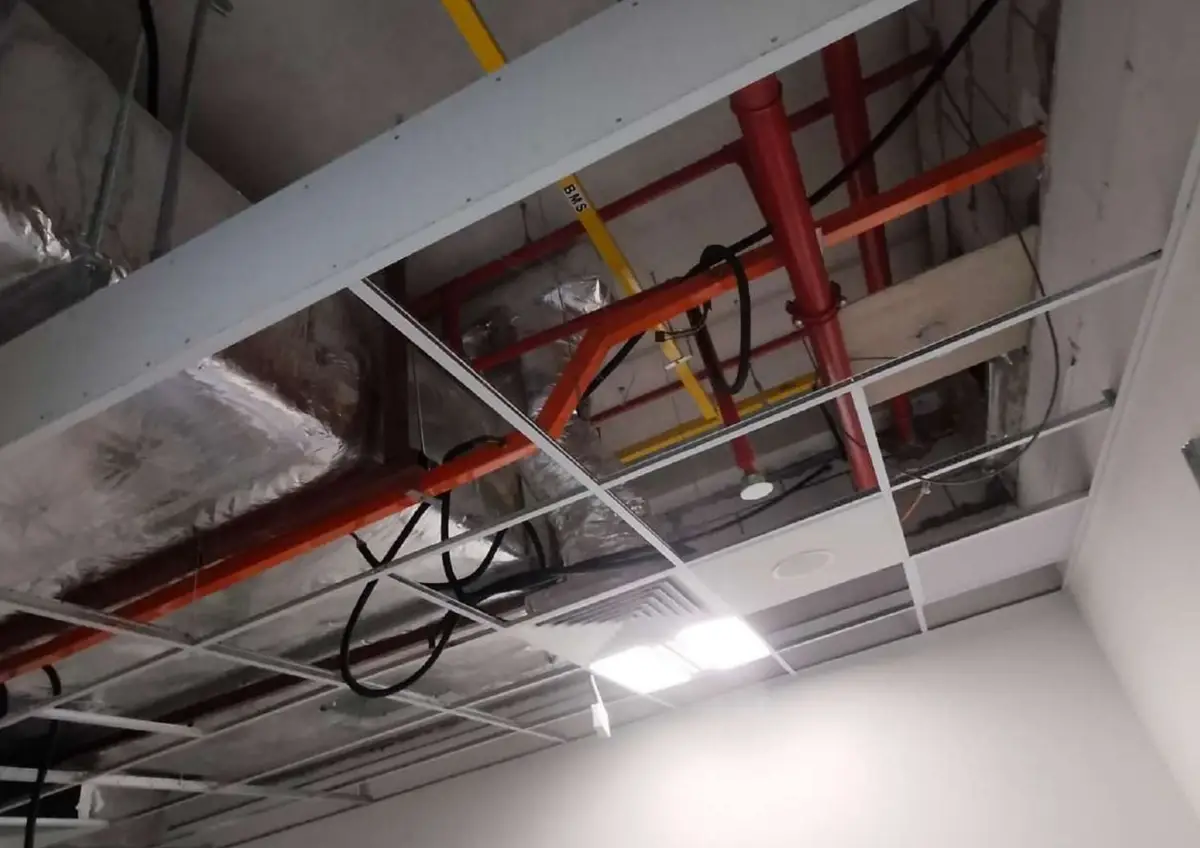
- Ceilings: the ceiling finish, and what is fixed to or above it, such as lights, air-conditioning outlets, sprinkler heads and smoke detectors.
- Fixtures and furniture: built-in cabinets, counters, shelving and signage, listed separately from loose furniture. The furniture disposal worksheet gives a table for both.
- Debris and make-good: who removes the debris, who sweeps up, and who repairs the surfaces left behind. Hacking a floor and restoring it are different lines in a scope.
Disposal of debris and bulky items
Where demolition begins and why the line moves
Omni's demolition page describes removing partitions, false ceilings, flooring, built-in fixtures and other built-up structures in homes, offices, shops, F&B units and industrial spaces. Its FAQ says approvals depend on the property type and the scope, and that for structural demolition or larger-scale works additional approvals may be required. That is the working line to hold on to: the more the work reaches the structure of the building, the less it is a matter between you and your contractor.
For an office or shop handover, most requests are for fixtures, partitions, ceilings and finishes. Even then, the landlord may specify what is to be removed, what is to be retained and how the unit should be left. The lease reinstatement clause guide and the office reinstatement checklist cover how to get that in writing before you ask for a price. If the end result is a new layout, the commercial renovation page and the drywall partition page describe what comes after the strip-out.
Questions that need an assessment before any quotation is final
A quotation prepared from photographs can describe the work as you have described it. It cannot decide whether an element is structural, what is inside it, or what the building will allow. Settle the questions below and keep the answers with the quotation. Omni's pages say site assessment comes before the quotation for hacking and demolition, and that the permits and approvals that apply depend on the premises.
| Question | Why it matters | Who confirms |
|---|---|---|
| Is this wall, ceiling or floor element structural? | A partition and a structural wall can look the same, and the scope and approvals route are different | A Qualified Person, with the landlord's written position |
| What is behind, above or under it? | Pipes, wiring, ducts, sprinklers and detectors may be fixed in or to the element, and removal can affect them | Landlord or building management, the contractor's site inspection, and a Qualified Person where structure or fire safety is involved |
| Does the lease require this removal, or forbid it? | Some items must be removed, others may be required to stay | The landlord, in writing |
| On which days and hours may noisy work run? | Building hours and national noise rules both apply, and they affect the start date and the sequence | Building management and NEA's published rules |
| How do materials and debris reach the loading point? | Lift booking, loading bay limits and protection of common areas can change the plan | Building management |
| Which items are retained and how are they protected? | Retained items next to hacking or dismantling can be damaged if they are not marked | You, then confirmed in the written scope |
| Who makes good and who removes the debris? | Removal and repair are separate lines and are often priced separately | The quotation, in writing |
Structural elements and the Qualified Person
Omni's hacking page covers the removal of selected non-load-bearing walls and partitions, and its FAQ says you should not hack any wall without first confirming whether it is structural. Treat that as the position for your own project too. A contractor can tell you what it has seen on site, but the person who confirms whether an element is structural is a Qualified Person.
BCA distinguishes works requiring plan approval and permits from insignificant building works. Structural plan submissions involve a registered civil or structural Professional Engineer acting as Qualified Person. Obtain advice on the route before works; the word dismantling on a quotation is not an exemption.
This guide does not tell you whether any wall in your unit is structural, and it does not say that any particular removal is exempt. Commercial units, HDB shops and offices and JTC premises have their own landlord rules, so ask the landlord and building management first. The commercial renovation approvals guide sets out how to assign who checks, who submits and who pays for each requirement.
Noise, working hours and who needs to be told
NEA regulates construction noise with limits depending on time and nearby premises. Its Sunday and public-holiday no-work rules have specific conditions and exceptions; they are not a blanket rule for every removal job. Check the current requirements for your site and confirm working hours with management before agreeing a programme.
Building management may set narrower hours than those national limits, and a mall or office tower may require lift booking, protection of common areas or notices to other tenants. Omni's hacking FAQ says that hacking and dismantling work may be subject to approved working hours set by HDB, condo management, mall management, office buildings or landlords. Ask for the written hours before agreeing a start date, and ask your contractor to build the sequence around them.
Send the details to Omni Contractors
To get a quotation based on the real scope, send Omni the address, floor and approximate area, photographs of each element to be removed, your list of items by room, anything the landlord or building management has said in writing, and the date you need the space ready. Say which items are retained, which have unknown structure behind them, and which areas cannot yet be inspected.
Omni says it assesses the site and advises on the scope, so share the information early and expect questions. Use the contact page or WhatsApp to send it. If the removal is part of a handover, include the landlord's checklist, and see the office reinstatement and shop reinstatement pages for the wider scope.
Sources
Statements about what Omni Contractors says it does come from its own published hacking, demolition and disposal services pages, read on 16 October 2026. The public sources below were read on the same date. They are general guidance and do not decide whether any rule applies to your premises.
BCA: Structural plan submission
BCA: Permit for structural works
BCA: Building works not requiring approval
NEA: Construction noise control
What is the difference between hacking and demolition?
In everyday quotations, hacking often means breaking out fixed finishes, dismantling means taking assembled items apart, and demolition can describe wider removal of built structures. The terms overlap. List the actual items, areas and making-good work; the label does not decide the approval route.
Does dismantling mean no approval is needed?
Not necessarily. Dismantling usually means taking assembled items apart rather than breaking them, but what needs clearance depends on what is dismantled, the building and the lease. Ask the landlord and building management in writing, and ask a Qualified Person where structure or fire safety may be affected.
Who decides whether a wall can be removed?
The landlord and building management must allow it, and where there is any question about structure a Qualified Person confirms whether the element is structural. BCA states that only a registered civil or structural Professional Engineer acting as a Qualified Person can apply for structural plan approval. A contractor can advise on what it sees, but its view does not replace that confirmation.
Can noisy hacking work be done at night or on Sundays?
Do not assume so. NEA’s noise limits and any applicable Sunday or public-holiday restrictions depend on the site and works. Building management may impose narrower hours. Confirm the rules and permitted hours before agreeing a start date.
What should I send to get a hacking, dismantling or demolition quotation?
Send the address, floor and area, photographs of each element, a list of items by room marked remove, may remove or retain, any landlord or building management instructions, access details and your target date. Flag walls whose structure you do not know and areas that cannot yet be inspected.
Free quotation
Tell us about your unit.
We quote on the actual scope. These help us get it right the first time:
- Floor plan or unit size
- Photos of each room and the ceiling
- Lease reinstatement clause or handover checklist
- Handover or move in date
Send us the details
WhatsApp is fastest. Attach photos, the floor plan or the handover checklist and we will come back with a quote.
WhatsApp 8368 2943 Call +65 9475 1494 Email us